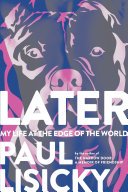
When Paul Lisicky arrived in Provincetown in the early 1990s, he was leaving behind a history of family trauma to live in a place outside of time, known for its values of inclusion, acceptance, and art. In this idyllic haven, Lisicky searches for love and connection and comes into his own as he finds a sense of belonging. At the same time, the center of this community is consumed by the AIDS crisis. What might this utopia look like during a time of dystopia?
What The Reviewers Say
Martha Anne Toll,
NPR
His analysis of...relationships is part revelatory for his keen powers of observation, part heartbreaking, and all human.
Michael Valinsky,
Los Angeles Review of Books
Later takes us on a heart-wrenching journey through Lisicky’s transition from living with his mother to his exploration and discovery of gay communities, and finally to his encounter with death and illness as a fellow at the Fine Arts Work Center in Provincetown. But, more specifically, Later asks us to consider the power of retrospection, a timely consideration given the global confinement regulation in the face of the current COVID-19 outbreak.
Alexander Chee,
Los Angeles Times
The chapters are full of named sections, lists of what makes up his life in Provincetown: Haven, Movie, Pilgrim, Foglifter, Wally, Imposter Syndrome. This pointillistic style allows Lisicky to build his story impressionistically. There are no surprises in the general plot, per se: Lisicky becomes the published writer and openly gay man we’ve come to know. But the 'how' of it fascinates.
Alex Tunney,
Lambda Literary
Lisicky writes in waves, as if to mirror the shore. Paragraphs that wash through you. Phrases that crash upon you. At first, it seems like bursts of prose with only a headline to collect thoughts and demarcate them into sections of each chapter. Only over time do you realize that you have been swept up. It’s a form of literary sprezzatura, one that is years in the making. It is a collection which keeps building upon itself; its heft is in the stories and small details it amasses. Because of this, it’s easy to get lost in this book. Knowing which long term relationship he was in (Hollis or Noah?), only helped to orient me so much. But I encourage letting yourself get lost, to letting feelings take over, on the first read. Then you can return to Town for the prose, both generous in detail and thoughtful in diction. Despite such a tight perimeter around Paul’s personal experience of Town, he avoids solipsism. Both Paul and the book are often asking where they situate in a larger picture.




 44
44