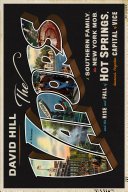
Back in the days before Vegas was big, when the Mob was at its peak and neon lights were but a glimmer on the horizon, a little Southern town styled itself as a premier destination for the American leisure class. Hot Springs, Arkansas was home to healing waters, Art Deco splendor, and Americaâs original national parkâas well as horse racing, nearly a dozen illegal casinos, countless backrooms and brothels, and some of the countryâs most bald-faced criminals.
What The Reviewers Say
Thrillist
... a deeply researched work focusing on the years between 1930-60, when Hot Springs served as the country's original Las Vegas with its one casino, full of organized crime, cons, bootleggers, and all kinds of other seedy characters you hope for in a colorful history book. A perfect conspiracy of capers that's ripe for summer reading..
Anne Bartlett,
BookPage
The history is fascinating, but what makes The Vapors a compelling—and ultimately heartwrenching—book is the author’s account of his own family, who lived in Hot Springs during the casino heyday. His grandmother Hazel Hill landed there as a teen, drifted into casino work after leaving her violent, alcoholic husband and neglected her sons as she fell into her own sad addictions. Hill tells the hard truth of her life with compassion and context..
Jonathan Miles,
The New York Times Book Review
Aside from her relation to the author, Hazel Hill’s role in this triad is initially unclear. We wait for her story — a country ballad filled with no-good men, pills, whiskey, evictions and dodgy casino gigs — to intersect with those of Harris and Madden, but it never really does, not precisely, anyway. Yet Hazel’s story, as The Vapors progresses, provides the emotional ballast, the counterweight to all the good-timey glitz, the darkness behind the neon signs. It gives the book its heft, and its warmth. The mob, Hill writes, turned to gambling after Prohibition partly because it considered gambling, like alcohol, to be a 'victimless crime.' Hazel’s story — complex, turbulent, as haunting as a pedal steel solo — serves as a soft rebuttal to that idea, and is the wellspring of David Hill’s achievement here..
Ricardo Laskaris,
Library Journal
More than a simple crime story, this is a forgotten history of Arkansas in the mid-20th century. Recommended for readers interested in antiheroes, self-made men, and survivor stories..




 21
21