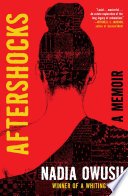
Nadia Owusu grew up all over the world with a father who worked for the United Nations. This plus her mother's abandonment, her father's death when she was a teenager, and her stepmother's cruelty all left her feeling homelessâa feeling compounded by learning a secret about her father, one that triggered a breakdown in her 20s that she explores here.
What The Reviewers Say
ILANA MASAD,
NPR
There are other threads, or cracks in the earth of her life, that she weaves in and out of these narratives, so that at times there is a sense that we are wandering away from the main question a chapter opened with. Owusu always brings us back just on time, so that what seems at first like free association is revealed, instead, as potent context. The effect ties directly into another of Owusu's main themes: Storytelling is how we understand ourselves, others, and the worlds we live in, and any story that is too simple or that holds no contradictions is suspect, for that means it lacks the nuance necessary for a deeper understanding. In her capable writing, stories become nearly tangible objects she holds to the light, turns over and over, eager to discover a never before glimpsed sparkle or a surprising divot in their familiar shapes..
Anita Gill,
Los Angeles Review of Books
For a young woman whose foundations were shaken several times in her life — including numerous moves to locales with literal tectonic rumblings along with the more metaphorical tremors of civil unrest — [Owusu's] approach effectively portrays the inner angst of individuals who have grown up amid trauma and have learned to be vigilant, to read the slightest shifts as foreboding. Owusu’s narrative deftly demonstrates a keen sense of others’ emotional states.
Marion Winik,
The Washington Post
Owusu’s history gives her the authority to write about many identities with confidence.
Jenni Sapio,
The Harvard Review
In some of the most self-aware prose I’ve seen...Owusu reexamines everything she’s come to understand.




 53