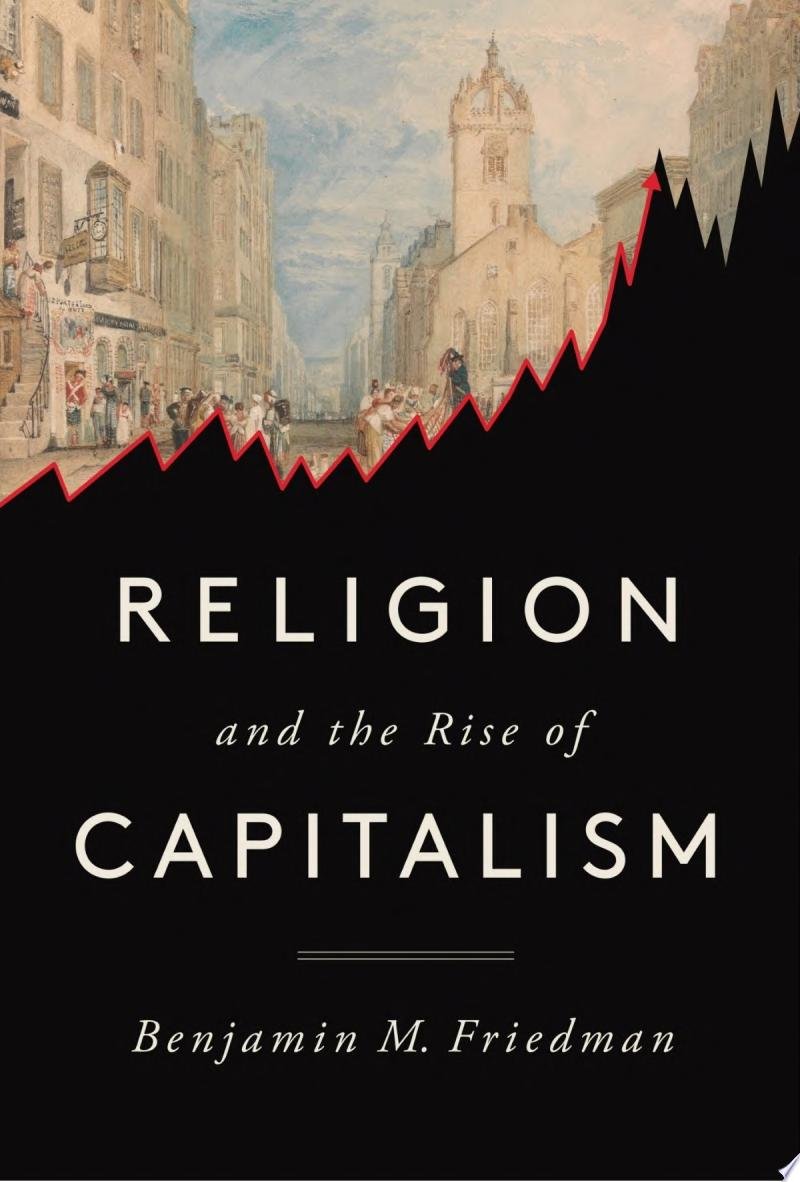
Critics of contemporary economics complain that belief in free markets--among economists as well as many ordinary citizens--is a form of religion. And, it turns out, that in a deeper, more historically grounded sense there is something to that idea. Contrary to the conventional historical view of economics as an entirely secular product of the Enlightenment, Benjamin M. Friedman demonstrates that religion exerted a powerful influence from the outset. Friedman makes clear how the foundational transition in thinking about what we now call economics, beginning in the eighteenth century, was decisively shaped by the hotly contended lines of religious thought within the English-speaking Protestant world.
What The Reviewers Say
Alan Wolfe,
The New York Times Book Review
What does an esoteric concept like Calvinist soteriology have to do with the rise of modern economics? Does laissez-faire have its roots in the arcane Quinquarticular Controversy? Can one find the origins of the welfare state in postmillennialist eschatology? Questions like these, according to the Harvard economist Benjamin M. Friedman, are essential to understanding his discipline today.
Carol Elsen,
Library Journal
Friedman has made an important contribution to the literature on the intertwining of Western economic thought with religious beliefs. His detailed tracing of the philosophical and theological roots of free market economics is well researched, well written, and well worth reading..
David Skeel,
The Wall Street Journal
The book’s title is misleading—Mr. Friedman’s narrative is about the evolution of economic thought, not capitalism. He alternates between theological debates and developments in economic thought. On economics he is compelling, on theology disappointingly tendentious. Mr. Friedman unselfconsciously presents as fact a host of skeptical—and highly debatable—claims about Christianity and biblical texts. More important, he relies on a caricatured version of Calvinism, especially the New Testament-based doctrine that God predestines some to be saved, to set up his central claim: The weakening of traditional Calvinism, he contends, spurred a more optimistic conception of human potential, which helped to inspire key innovations in economic thought.
Bryce Christensen,
Booklist
Friedman exposes the profound influence of the religious thinking pervading the eighteenth-century Scottish intellectual environment in which Smith and Hume worked. More specifically, Friedman illuminates the effects on both thinkers of the displacement of dour Calvinism by a newly optimistic Protestantism affirming the benefits of individuals freely making choices while pursuing their own self-interests.




 16
16 93
93