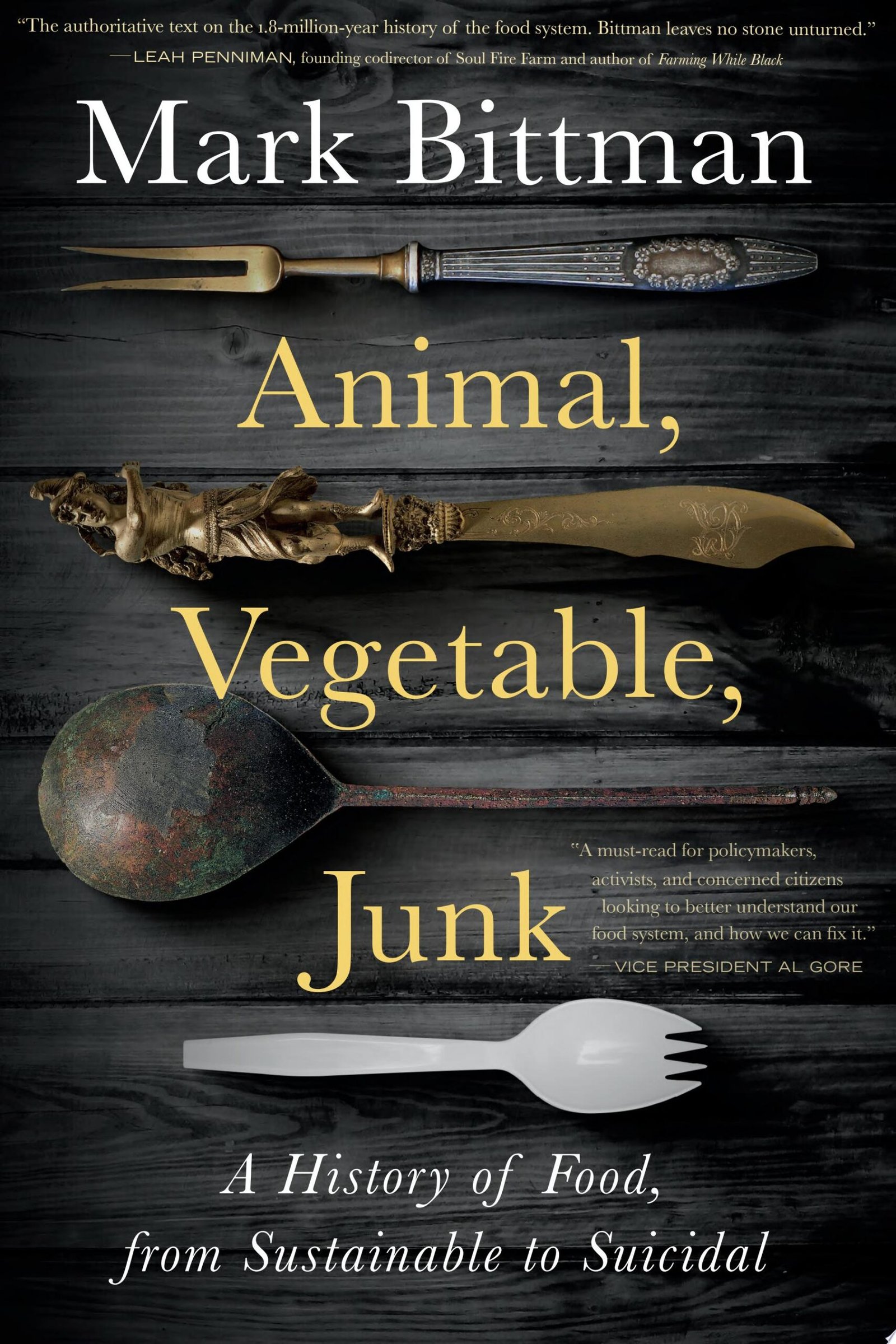
From hunting and gathering to GMOs and ultraprocessed foods, this tour of human history rewrites the story of our speciesâand points the way to a better future. A century ago, food was industrialized. Since then, new styles of agriculture and food production have written a new chapter of human history, one that's driving both climate change and global health crises. Best-selling food authority Mark Bittman offers a panoramic view of the story and explains how we can rescue ourselves from the modern wrong turn.
What The Reviewers Say
Ted Genoways,
The New York Times Book Review
... matches our moment — evincing a necessary sense of urgency but also making no bones about the challenge before us.
Mark Knoblauch,
Booklist
Food maven Bittman (How to Cook Everything, 2019; How to Eat, 2020) turns his wide-ranging attention to how foods arrive on the nation’s home and restaurant tables. What he discovers is not appetizing.
Rien Fertel,
The Wall Street Journal
Animal, Vegetable, Junk covers the scope of human history, yet the historian’s hat doesn’t quite fit Mr. Bittman. Chapters lack narrative cohesion and central characters to help ground and guide the story. The Irish potato famine, the Indian cotton bubble and the effects of the Opium Wars on Chinese grain reserves are all stuffed into three consecutive pages. Less would have added more to the author’s argument..
Kirkus
Offering a sweeping history of the ways humans have procured, processed, and consumed food, Bittman focuses on the political, social, cultural, and environmental consequences of the transformation from hunting and gathering to agriculture and of the increased industrialization of the food system. Like authors such as Jared Diamond and Yuval Noah Harari, Bittman asserts that agriculture 'sparked disputes over landownership, water use, and the extraction of resources' and has 'driven exploitation and injustice, slavery and war'.




 34
34 89
89