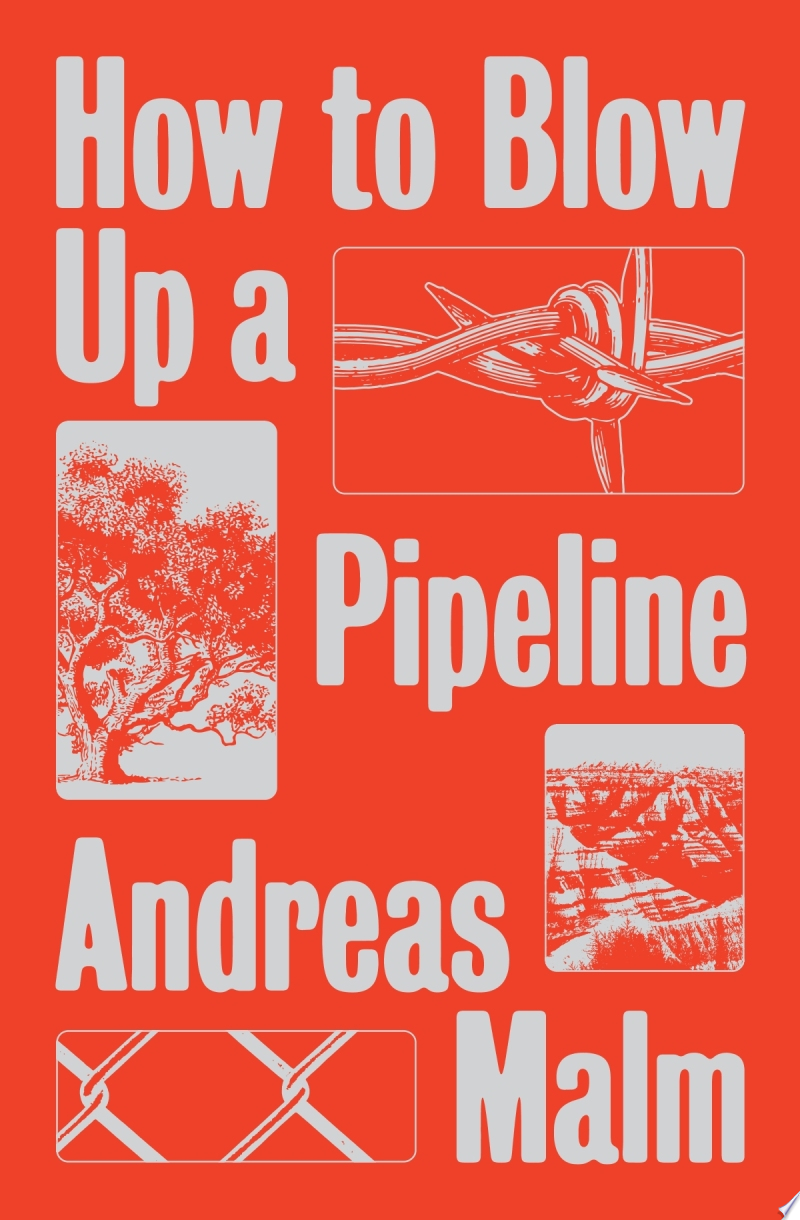
Noted climate scholar (and saboteur of SUV tires and coal mines) Andreas Malm makes an impassioned call for the climate movement to escalate its tactics in the face of ecological collapse. We need, he argues, to force fossil fuel extraction to stop--with our actions, with our bodies, and by defusing and destroying its tools. We need, in short, to start blowing up some oil pipelines.
Offering a counter-history of how mass popular change has occurred, from the democratic revolutions overthrowing dictators to the movement against apartheid and for women's suffrage, Malm argues that the strategic acceptance of property destruction and violence has been the only route for revolutionary change.
What The Reviewers Say
Scott W. Stern,
Los Angeles Review of Books
In his latest book, How to Blow Up a Pipeline, Malm draws on both his academic and activist experience to make the case that the climate movement should escalate its tactics. It’s a passionate, powerful, deeply flawed, and profoundly necessary book, by turns exclaim-aloud satisfying and hurl-it-across-the-room frustrating. It’s a book that may excite some readers, anger others, convince still others, and alienate many, but it is unlikely to be forgotten by a single one..
Tatiana Schlossberg,
The New York Times
[Malm] advocates powerfully against despair and powerlessness. One of the most satisfying parts of his book comes when he brutally dispatches with 'climate fatalists' like Jonathan Franzen, who argue that we should all just give up.
Michael Robbins,
Bookforum
I regret to inform the reader that Andreas Malm’s new book, How to Blow Up a Pipeline, does not in fact contain instructions on how to blow up a pipeline. The title is aspirational: how to get enough people to realize that (a) drastic measures are now required to prevent or ameliorate the worst effects of global warming, (b) the usual protests and appeals to institutional authority are getting nowhere, and therefore (c) direct action against the instruments and agents of climate disaster is justified.
Benjamin Kunkel,
The New Republic
Plenty of readers will react (as I did) with a sort of instinctive skepticism to Malm’s case that only widespread property destruction can forestall civilizational suicide, but his case deserves a hearing.




 4
4 100
100