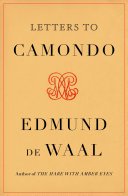
The potter Edmund de Waal’s multi-prize winning 2010 family memoir The Hare With Amber Eyes uncovered the story behind a collection of 264 Japanese netsuke – small, intricately carved ivory figures including the eponymous hare – and along the way became a subtle investigation of inheritance, the Jewish diaspora, the glories and horrors of European history and the relationship between objects and memory. This new book features several of the people first encountered in Hare and again De Waal uses objects – this time the lavish collections of 18th-century French art, porcelain and furniture assembled by Moïse de Camondo in early 20th-century Paris – to explore a richly dramatic era. While Letters to Camondo would most obviously be described as a companion to the earlier book, perhaps more accurately it should be called a neighbour.
Allan Massie,
The Scotsman (UK)
Everyone who bought, read and loved Edmund de Waal’s first book. The Hare With Amber Eyes, will find equal interest and delight in Letters to Camondo. It is a beautiful and fascinating book, even if its last pages are painful and depressing. It is also beautifully produced, on good paper with fine illustrations, and how Chatto & Windus can do this at less than the price of many shoddily-published novels beats me.
Maurice Samuels,
The New York Times Book Review
Letters to Camondo will fascinate anyone who has projected complicated emotions onto objects.
Ian Thomson,
The Evening Standard (UK)
When is a life worth telling? Edmund de Waal’s haunting account of a Parisian collector and the fate of his Jewish family during the German occupation of France combines ghastly drama with domestic detail, in a jewel-like amalgam of history and personal reflection that absorbs from start to finish.Ten years on from The Hare with Amber Eyes, de Waal turns his careful, exacting gaze on the life and times of the Count de Camondo, a scion of a Constantinople banking family known as the 'Rothschilds of the East'.