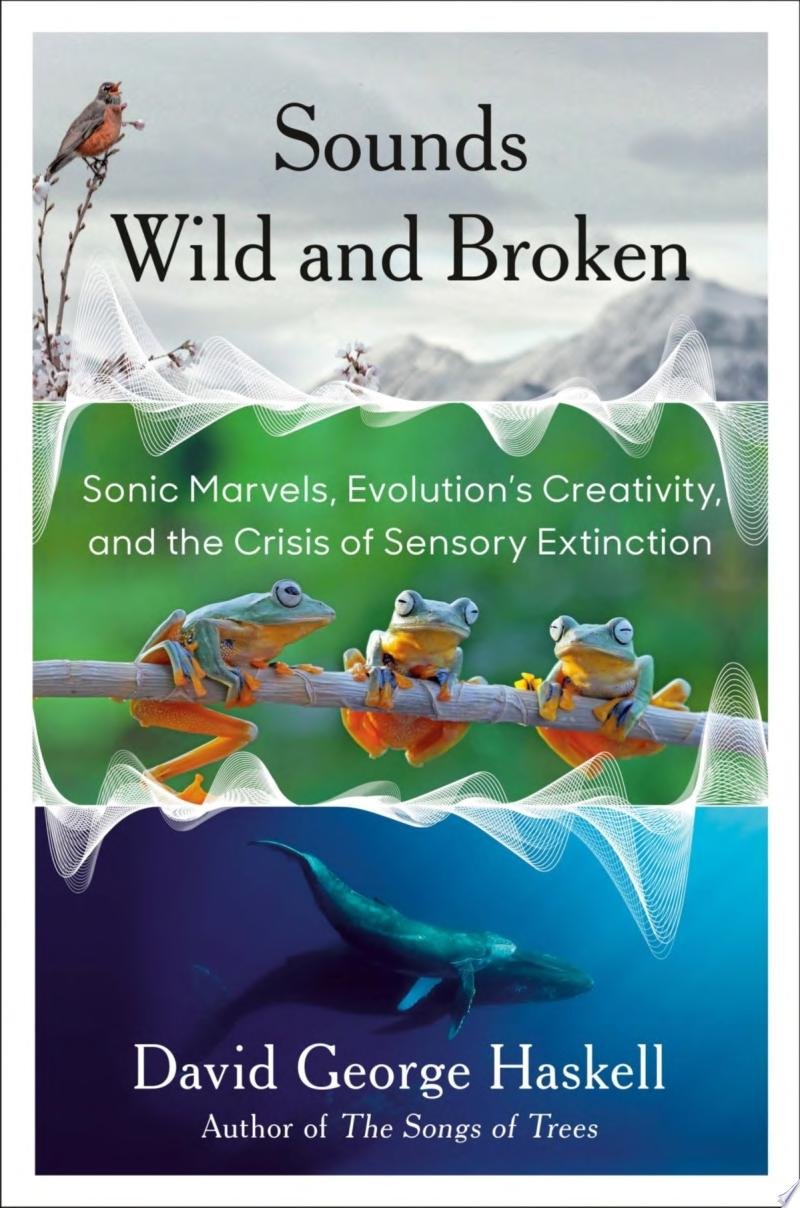
An environmental studies professor illuminates and celebrates the emergence of the varied sounds of our world. In mammoth ivory flutes from Paleolithic caves, violins in modern concert halls, and electronic music in earbuds, we learn that human music and language belong within a larger story of ecology and evolution, beginning with the origins of animal song and traversing the whole arc of Earth's history.
What The Reviewers Say
Cynthia Barnett,
The New York Times Book Review
... [an] exquisite new book.
Michael Ray Taylor,
Chapter16
Haskell creates a pleasing poetry of nature, his carefully crafted sentences luring readers in for the long haul. Open the book to any page, let your eyes fall on a paragraph, and the feeling is akin to walking the halls of a large university and hearing a professor speak with such passion and knowledge about some otherwise obscure topic that you wander through the open door and take a seat in the last row. Before you know it, hours have passed.
Anna Spydell,
BookPage
From vibrations picked up by single-celled organisms, to the childlike babbling of newly hatched birds, to the astounding invention of the first human instruments, played in cave chambers selected for their resonance, this tale brims with enchanting facts you won’t believe you never knew. Haskell’s prose is suffused with enthusiasm and poetic in form. The way in which he loads each sentence with information is so animated, it’s fair to say this is a book that would talk with its hands if it could.
Kirkus
Seamlessly melding history, ecology, physiology, philosophy, and biology, Haskell exults in the delightful cacophony created by birds and insects, wind and sea, human voices and musical instruments.




 40
40 96
96