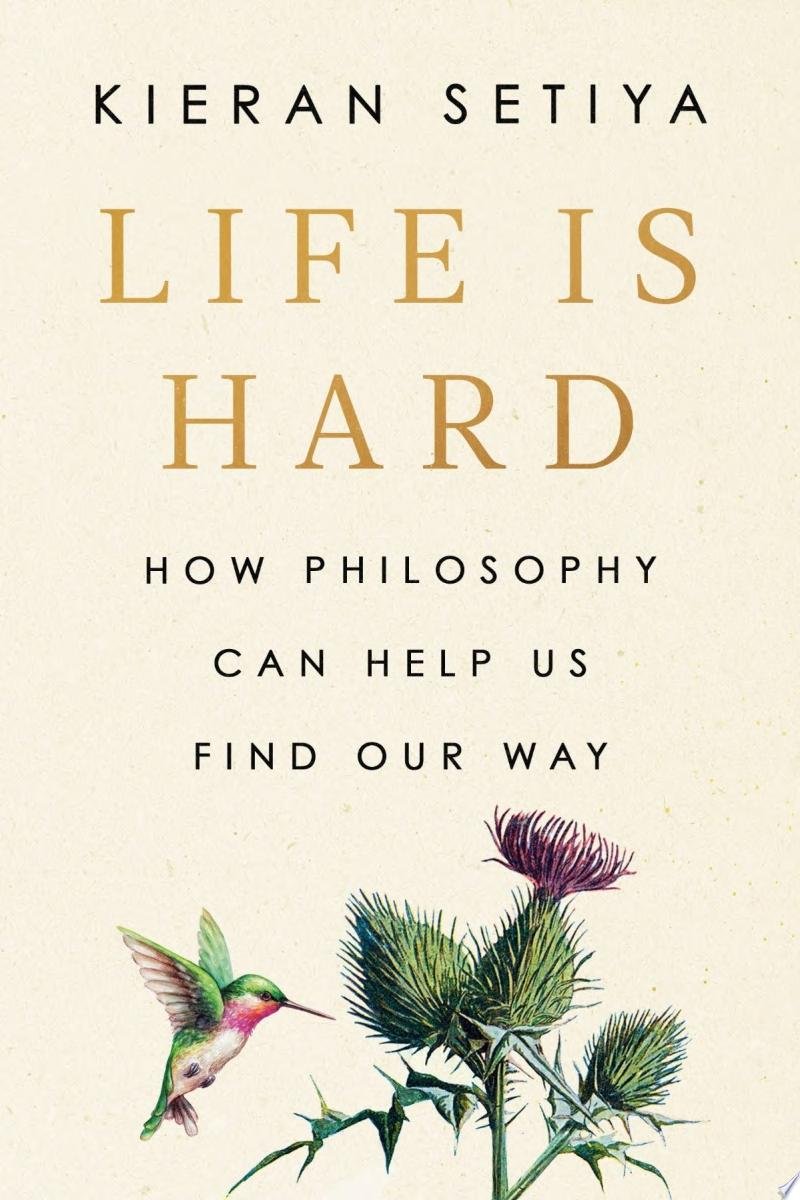
A philosophical guide to facing lifeâs inevitable hardships.
What The Reviewers Say
Anil Gomes,
The Guardian (UK)
Through carefully crafted examples, [Setiya] makes the case that philosophy can help us navigate the adversities of human life: pain, loneliness, grief and so on. He, too, is trained in the splitting of hairs. But this is not primarily a book of argument. It is a reflection designed to offer us new ways of thinking about ordinary hardships.
Irina Dumitrescu,
The New York Times Book Review
Setiya’s treatise belongs to a particular genre: brainy books for the general public that present lessons for modern living from Aristotle, Montaigne or the Stoics. Unlike with most of his predecessors, however, Setiya’s main goal is not to describe how things should be; in his view, given that there is much in life that makes us miserable, and that we can neither change nor ignore, we might as well find ways of dealing with the reality. Trying to live a perfect life in difficult circumstances, he states, 'only brings dismay'.
Kathleen McBroom,
Booklist
If life is hard, as Setiya posits in the title and introduction to this book, the following chapter headings do not seem to offer much reassurance: Infirmity, Loneliness, Grief, Failure, Injustice, and Absurdity. Readers who persist, though, will find the MIT philosophy professor’s engaging musings on the definitions and properties of these emotional, intellectual, and physiological conditions as defined by both ancient and contemporary philosophers and social commentators. Setiya pulls examples from literature, poetry, movies, comedy, religious tracts, and personal anecdotes to illustrate his points, managing to make abstract theories and arguments accessible.
Jennifer A. Frey,
The Wall Street Journal
Mr. Setiya’s path avoids the easy answers. He does not say that everything happens for a reason (it does not) or that virtue secures a good life (it might not) and certainly not that we can know the cosmos is guided by a loving, providential hand (we can not). Rather, the consolation he provides is 'a handbook of hardships,' a guide to navigating through life’s challenges. His analysis combines philosophical arguments and personal reflections on his own experience. He offers this in the hope that it will help readers better understand their own suffering and perhaps ease the weight of it. The result is a deeply personal exploration of six forms of human suffering—infirmity, loneliness, grief, failure, injustice and absurdity—with a final reflection on the one virtue he offers as necessary to navigate them all: hope.




 40
40