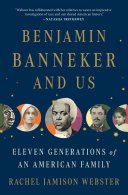
In 1791, Thomas Jefferson hired a Black man to help survey Washington, DC. That man was Benjamin Banneker, an African American mathematician, a writer of almanacs, and one of the greatest astronomers of his generation. Banneker then wrote what would become a famous letter to Jefferson, imploring the new president to examine his hypocrisy, as someone who claimed to love liberty yet was an enslaver. More than two centuries later, Rachel Jamison Webster, an ostensibly white woman, learns that this groundbreaking Black forefather is also her distant relative.
What The Reviewers Say
Jess Row,
The New York Times Book Review
It’s an awkward situation, to say the least, and to Webster’s credit, she leans into the awkwardness. Her excellent and thought-provoking book is on every level about unknowing rather than knowing.
Maud Newton,
The Washington Post
Sweeping, frequently insightful, often speculative and sometimes extremely moving.
Ericka Taylor,
NPR
The conversations between Webster and her cousins are among the more compelling parts of the book, providing a platform for the cousins to share the implications of their ancestry as Black people.
Publishers Weekly
A stunning meditation on race, identity, and achievement.