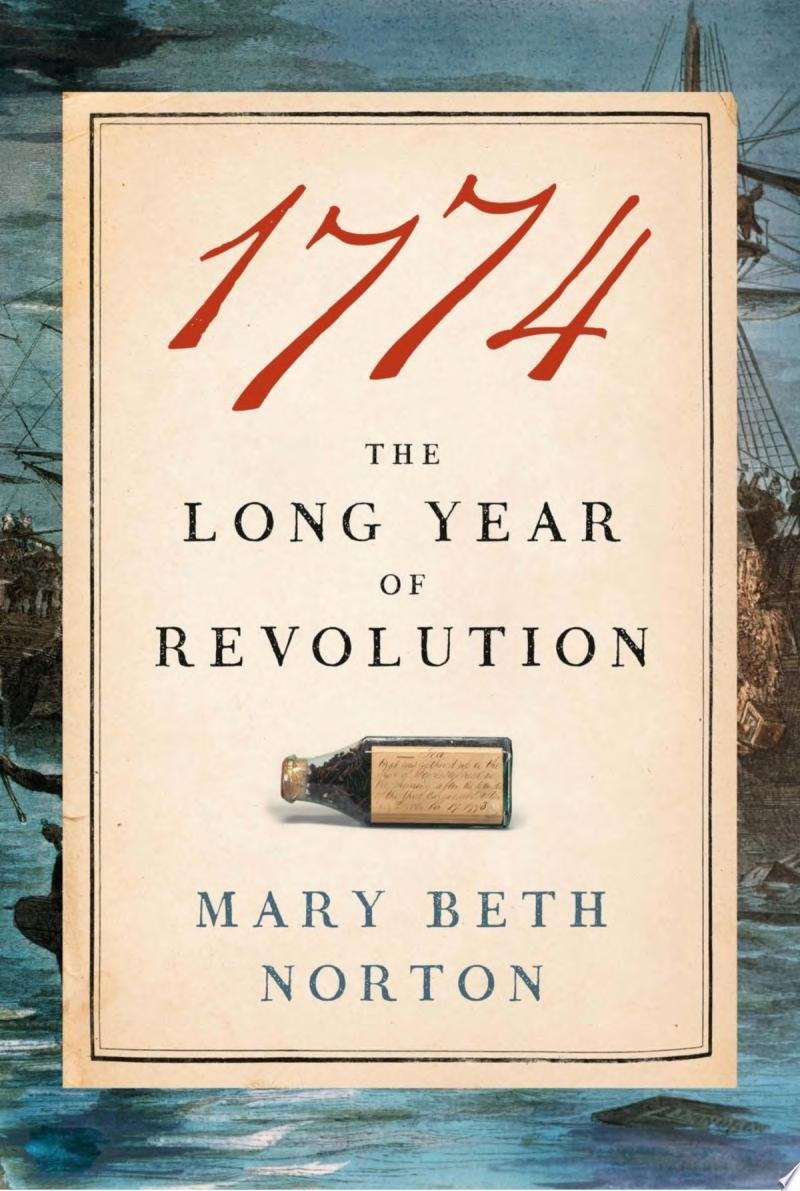
A look at the critical "long year" of 1774 and the revolutionary change that took place from December 1773 to mid-April 1775, from the Boston Tea Party and the first Continental Congress to the Battles of Lexington and Concord.
What The Reviewers Say
Jerry Lenaburg,
The New York Journal of Books
... refreshing.
Gordon S. Wood,
The Wall Street Journal
Ms. Norton does not fundamentally challenge the traditional trajectory of events in that decisive year. What she does do is enrich the narrative, filling in the story with a staggering amount of detail based on prodigious research in an enormous number of archives. She doesn’t just tell us how many pounds of tea the East India Co. placed on seven ships sailing to Boston, New York, Philadelphia and Charleston, S.C. in late 1773, but she describes the kind of tea that was sent...Some readers might think this is specification run wild.
Roger Bishop,
BookPage
Norton brings that 16-month period vividly alive in her meticulously documented and richly rewarding 1774.
Alice Burton,
Booklist
History is most certainly told by the winners, but contemporary newspaper accounts, letters, and sermons provide the narratives not told in our modern textbooks. The story of the Boston Tea Party, passed down throughout American history, is brought into the light as a multifaceted, controversial event. This laying out of detailed facts concerning everything from the aforementioned tea-dumping to the First Continental Congress encourages readers to question previous assumptions. Norton quotes firsthand accounts and draws on her long history of Loyalist scholarship to underline that what now seems an inevitable page in American history was not always so clear, and the past that we harken back to is sometimes all too similar to our present day..




 20
20