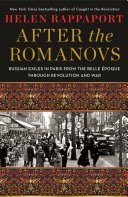
Paris has always been a city of cultural excellence, fine wine and food, and the latest fashions. But it has also been a place of refuge for those fleeing persecution, never more so than before and after the Russian Revolution and the fall of the Romanov dynasty. For years, Russian aristocrats had enjoyed all that Belle Ãpoque Paris had to offer, spending lavishly when they visited. It was a place of artistic experimentation, such as Diaghilev's Ballets Russes. But the brutality of the Bolshevik takeover forced Russians of all types to flee their homeland, sometimes leaving with only the clothes on their backs.
What The Reviewers Say
Douglas Smith,
Los Angeles Review of Books
Few historians are better prepared to clear away the fog of confusion, error, and self-serving dishonesty that has kept these questions unanswered for so long than Helen Rappaport, one of today’s leading experts on the last Romanovs. Rappaport has dug deeply in archives around the world and uncovered a wealth of new information that is certain to make The Race to Save the Romanovs the definitive work on the subject.
Douglas Smith,
Wall Street Journal
Ms. Rappaport’s treatment of the various writers who ended up in Paris is one of her book’s many strengths. She writes with sensitivity of Gazdanov, Nina Berberova, Teffi, and especially Ivan Bunin, one of the greatest Russian writers of the last century, winner of the Nobel Prize in 1933, and the voice for Russia Abroad. Few of these names are remembered, and even fewer, unfortunately, are still read, but After the Romanovs brings them marvelously back to life..
Robin Olson,
Air Mail
Rappaport’s account of this escape in 1920 of thousands in overcrowded, listing ships from Crimea to Constantinople and onward is vivid and harrowing.
Rebecca Reich,
New York Times Book Review
Nursing hopes of regime change made life in exile bearable. But did the émigrés ever stand a chance of overthrowing the Bolsheviks? What impact did they have on European political and artistic culture as the clock ticked down to World War II? Rappaport’s thickly descriptive, often gossipy history veers determinedly away from the wider and more urgent questions that arise naturally through her narrative.