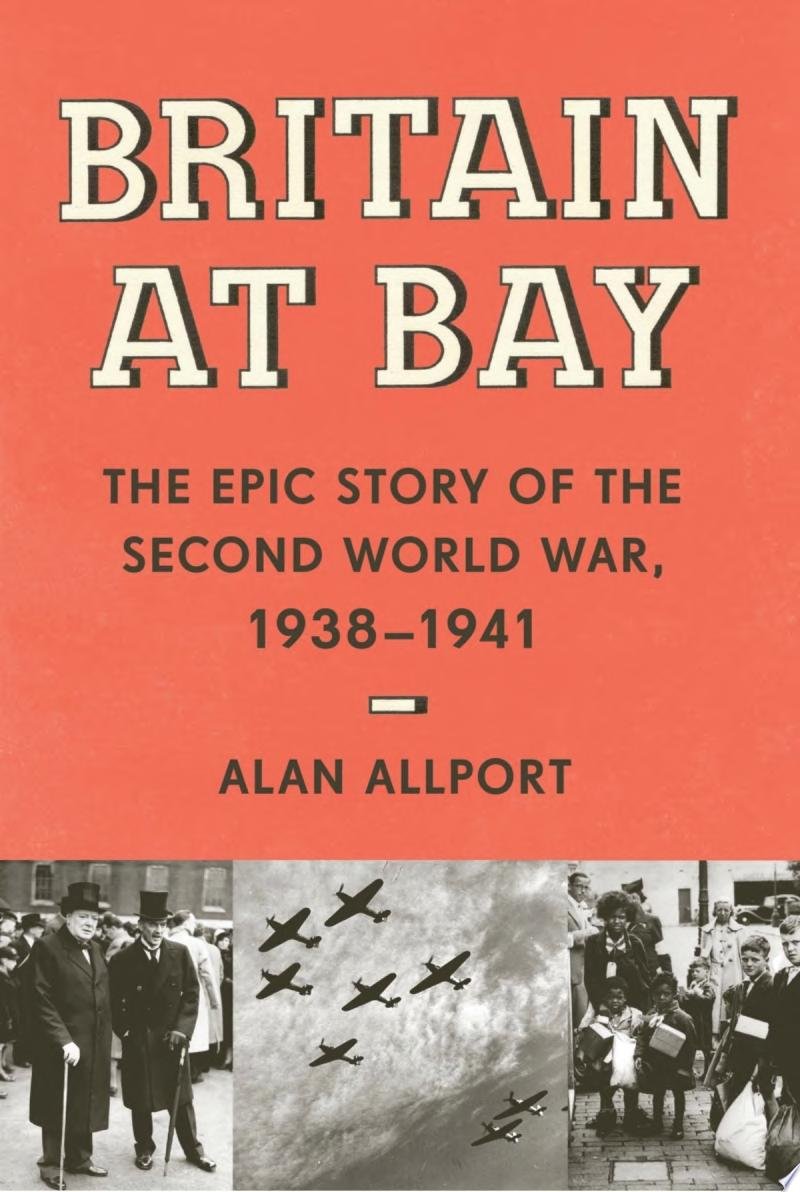
In looking closely at the military and political dimensions of the conflict's first crucial years, Alan Allport tackles questions such as: Could the war have been avoided? Could it have been lost? Were the strategic decisions the rights ones? How well did the British organize and fight? How well did the British live up to their own values? What difference did the war make in the end to the fate of the nation?
What The Reviewers Say
Julie V. Gottlieb,
The Times Literary Supplement (UK)
... demonstrate[s] well what we can learn and need to relearn about Britain’s People’s War.
Geoffrey Wheatcroft,
The New York Times Book Review
... unusually informative and stimulating.
Paul Kennedy,
Wall Street Journal
There’s a lot of this saga in Mr. Allport’s 450-page account—how could there not be?—but as one turns again and again to the evidence on offer in the endnotes (more than 60 pages of them), one has a growing sense that Britain at Bay is more than that—in fact, that it might be the single best examination of British politics, society and strategy in these four years that has ever been written. I use the word 'examination' here because the book is much more than a fine narrative account of great personalities and surface actions, of the history of events. It reaches to deeper levels—of geography and grand strategy, and wartime logistics, of shipping logistics and troop deployments.
Eric Martone,
The New York Journal of Books
Through examining these questions, Allport focuses on the human element, exploring how individuals’ lives contributed to and were impacted by the outcome of events.