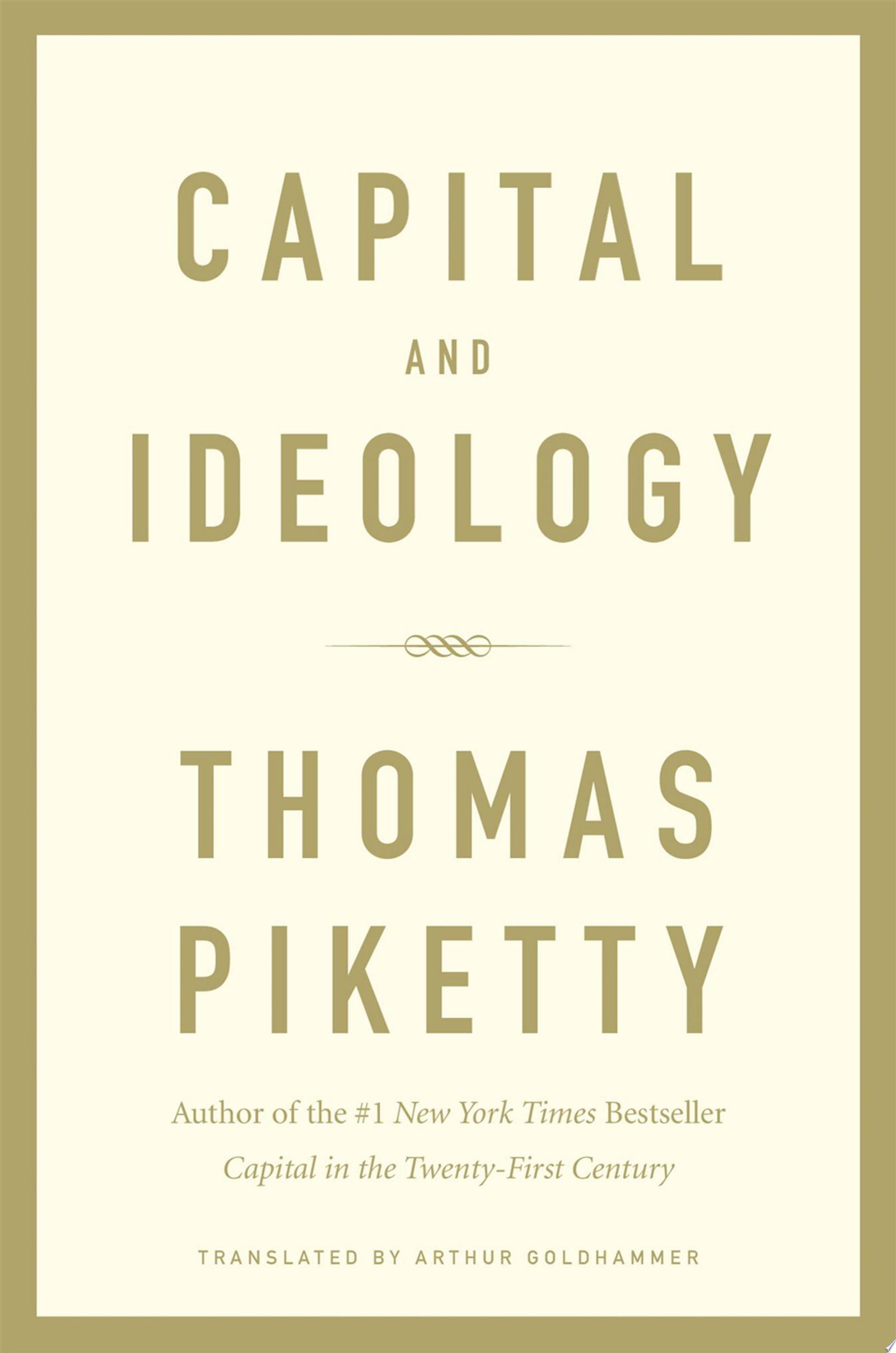
The French economist offers a follow up to his influential Capital in the Twenty-First Century, challenging readers to revolutionize how they think about ideology and history, exposing the ideas that have sustained inequality since pre-modern times, and outlining a fairer economic system.
What The Reviewers Say
Geoff Mann,
London Review of Books (UK)
The book is packed with fascinating detail and vast quantities of skilfully assembled data; it is written (and translated, by Arthur Goldhammer) in an accessible, conversational tone. But Piketty’s vital contribution is somewhat obscured by the book’s title. He is not in the business of uncovering the ideological dynamics that make the interests of the powerful appear to coincide with everyone’s general interest—what Boutmy called ‘political hegemony’—or in explaining the way they have historically operated. Instead, he gives us a systematic examination of inequality across time and place, and of the ideas the powerful have used to justify it.
Simon Kuper,
Financial Times (UK)
My conclusion: the 1,200-page tome might become even more politically influential than the French economist’s 2013 overview of inequality, Capital in the Twenty-First Century.
Idrees Kahloon,
The New Yorker
If inequality has become the subject of intense public attention, a good deal of the credit goes to the French economist Thomas Piketty.
Leonid Bershidsky,
Bloomberg
Piketty’s book doesn’t do a good job of explaining how an inevitable collapse in property prices will affect the tax base and investment.




 84
84 10
10