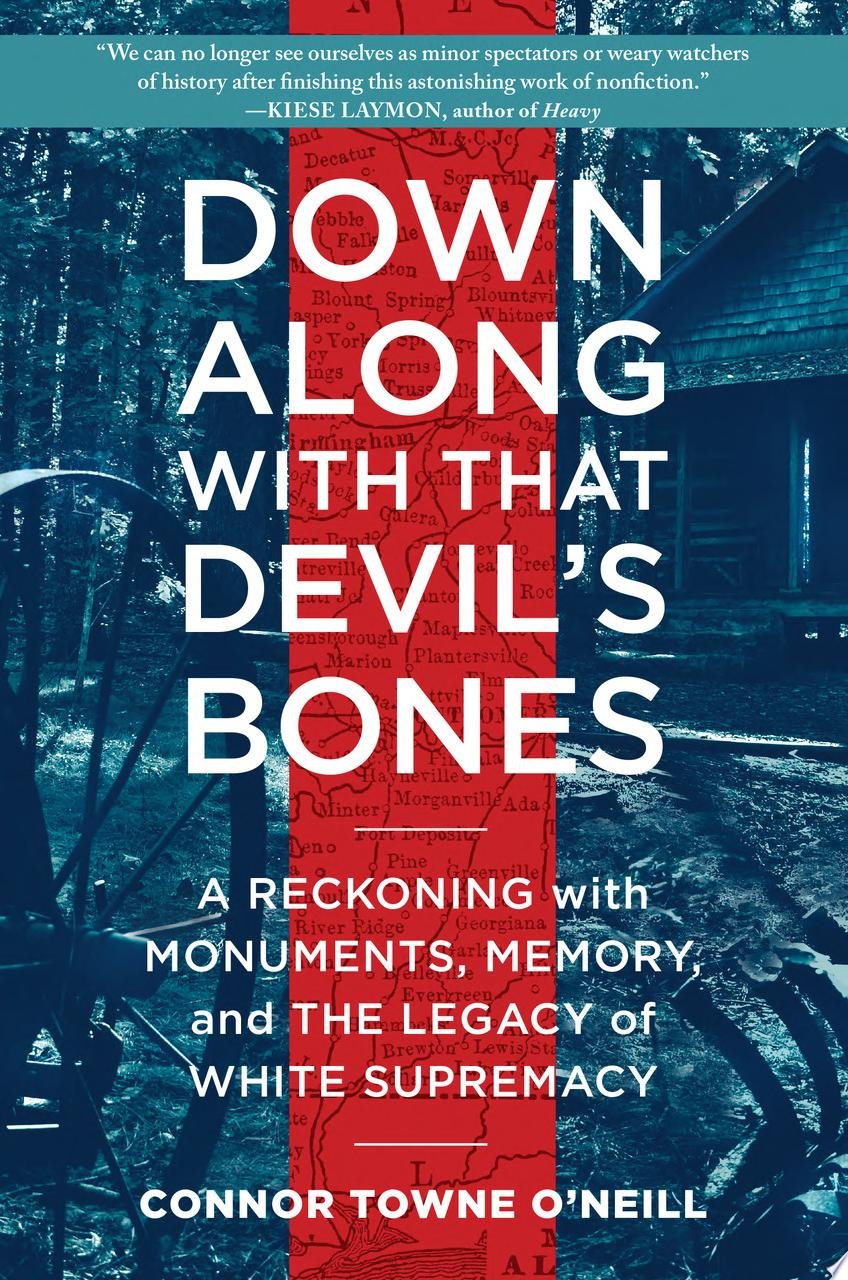
In Down Along with That Devil's Bones, journalist Connor Towne O'Neill takes a deep dive into American history, exposing the still-raging battles over monuments dedicated to one of the most notorious Confederate generals, Nathan Bedford Forrest. Through the lens of these conflicts, O'Neill examines the legacy of white supremacy in America.
What The Reviewers Say
Roger I. Abrams,
The New York Journal of Books
Connor Towne O’Neill, a Pennsylvania native author and journalist who teaches at Auburn University in Alabama, set out to understand American racism by visiting monuments of Nathan Bedford Forrest, a Confederate general who represented all that was evil about the South.
Stephanie Sendaula,
Library Journal
The narrative excels in blending personal and historical throughout, but especially in Memphis, as the author visits a church on the site of Forrest's former slave mart and delves into the general's involvement in the 1864 Fort Pillow Massacre.
Kathy Sexton,
Booklist
This timely, engaging book examines whiteness through controversial Confederate symbols and statues that have become a focal point in the national discussion about systemic racism and white supremacy. Producer of the podcast White Lies, O’Neill focuses on several statues and a building named after Confederate general Nathan Bedford Forrest, who looms large in Confederate lore.
Carla Jean Whitley,
BookPage
Though O’Neill doesn’t go too deep into his own experience, sharing his inner monologue serves as an invitation for white readers to likewise examine the ways they have benefited from systems built by and in the interest of white people. Along the way, O’Neill offers all readers a lens through which to examine their relationship to the past.The monuments O’Neill writes about were erected long after Forrest’s death. In this way, the Confederacy isn’t just history. It’s a foundation for how our present-day society functions. In recounting the ways Nathan Bedford Forrest’s legacy shows up in contemporary life, Down Along With That Devil’s Bones points to the oppression these monuments seek to preserve. This book is a well-researched history and a call for reformation in America..




 37
37