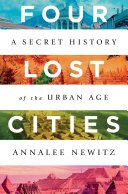
A quest to explore some of the most spectacular ancient cities in human historyâand figure out why people abandoned them.
What The Reviewers Say
Felipe Fernandez-Armesto,
The Wall Street Journal
Science journalist and fiction writer Annalee Newitz, who is reluctant to let capital determine fate, wants people to choose where to live and how to work in the land of the free. The book wavers between rival explanations for writing about why people “lose” cities. Sometimes more reasons appear for choosing city life in the first place, or for why people put so much work into doomed structures. Much attention focuses laudably on retrieving residents’ lives from middens, graffiti, and the layout of sewers, or ruts in the roads; elsewhere, the author concentrates on the misdeeds of elites that make those lives intolerable. Early on, readers learn that the book was written in refuge from—perhaps expiation for—the suicide of the writer’s estranged father. The reaction seems unusual: Most people, according to their means, might erect a monument, endow a charity, or leave flowers. But the author is a journalist, and it is no sin to labor in one’s vocation.
Russell Shorto,
The New York Times Book Review
Though Annalee Newitz began work on Four Lost Cities long before the Covid-19 pandemic, it’s impossible to read it today without periodic is-this-where-we’re-headed? musings. The book functions as a travel guide to places that no longer exist.
Sarah Rice,
Booklist
Newitz clearly draws parallels and lessons for the here and now from these once-vast settlements. We are not immune to natural disasters, political upheaval, and labor force abuses. What happens if cities become unlivable for too many? Highly recommended for anyone interested in that question and in what history can tell us about the possibilities for the future..
Kirkus
An exploration of four far-flung ancient cities, each undone by climate and politics. An alternate title for this book might be A People’s History of Urbanism . Newitz is interested in how cities form, grow, and dissipate, and the author trains their focus on how everyday lives were affected by those processes.