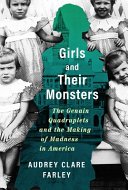
In 1954, researchers at the newly formed National Institute of Mental Health set out to study the genetics of schizophrenia. When they got word that four 24-year-old identical quadruplets in Lansing, Michigan, had all been diagnosed with the mental illness, they could hardly believe their ears. Here was incontrovertible proof of hereditary transmission and, thus, a chance to bring international fame to their fledgling institution. The case of the pseudonymous Genain quadruplets, they soon found, was hardly so straightforward. Contrary to fawning media portrayals of a picture-perfect Christian family, the sisters had endured the stuff of nightmares. Behind closed doors, their parents had taken shocking measures to preserve their innocence while sowing fears of sex and the outside world.
What The Reviewers Say
Rebecca Onion,
The Washington Post
The Morloks’ life stories come to us...via diaries, letters, medical records and interviews with the last remaining quadruplet.
Jonathan Rosen,
The New York Times Book Review
Fascinating.
Donna Edwards,
Associated Press
Mysticism about multiples and America’s affair with eugenics are just some of the intriguing background Farley presents for context.




 7
7 50
50