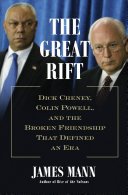
The history of the intertwined careers of Dick Cheney and Colin Powell, whose rivalry and conflicting views of U.S. national security color our political debate to this day.
What The Reviewers Say
Jeffrey A. Engel,
The New York Times Book Review
... depicts in depressingly vivid detail Powell’s inability to summon the political and moral courage necessary to check Cheney’s foolhardy plans.
Heather Hurlburt,
The Washington Post
Mann wants his readers to know that Cheney had no post-9/11 change of heart. He documents the consistency of his deep conservatism and unilateralism across decades. Mann is less clear in explaining what became of the GOP foreign policy establishment’s talent for teamwork and realism. He seems to believe that Cheney’s unilateralism and drive for power helped provoke the fatal errors of the Iraq War, while Powell’s 'passivity' prevented a meaningful challenge to the war from taking shape inside the administration. Or that is my interpretation—Mann never offers a judgment.
Francis P. Sempa,
The New York Journal of Books
Mann goes beyond policy and philosophical differences to portray Cheney as a dark (i.e, 'conservative,' 'right-wing') and sinister ('neoconservative,' 'hawk') force who exercised too much influence over the inexperienced Bush 43. Powell, on the other hand, is portrayed as prudent, moderate, measured, diplomatic, George Marshall-like..
Kirkus
A useful review of the hard-right shift of U.S. foreign policy since the end of the Cold War, delivered via a comparative study of two of the seminal players.




 60
60 10
10