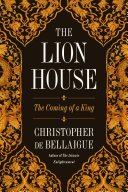
From the palace cloisters of Istanbul to the blood-soaked fields of central Europe to the sun-scorched coast of north Africa, The Lion House uses eyewitness history to tell the true story of Suleyman the Magnificent, whose sixteenth-century reign over the Ottoman Empire saw power at its most glittering, personal, and deadly.
What The Reviewers Say
Justin Marozzi,
The Sunday Times (UK)
... ambitious and original.
Claire Messud,
Harper's
The finest historical fiction renders the strange grippingly familiar; so too do those rare historians whose novelistic understanding of their subject brings it to life. Christopher de Bellaigue, an acclaimed historian of the Middle East, has done just this in The Lion House, a vivid, cinematic account of the rise of Suleyman the Magnificent that is written almost entirely in the present tense.
David Aaronovitch,
The Times (UK)
It is all written in the present tense. This creates the obvious sense of liveliness and urgency as well as dissipating a little the slightly dead feeling the reader can experience with historical narratives, that you already know the end before you begin and there is nothing to play for. That urgency can come at a cost to your trust in the historicity of the writing and would be tricky to sustain, but shorn of index and notes, The Lion House is less than 250 pages long and Bellaigue, whose previous books include The Islamic Enlightenment, sets about the task with such confidence and skill that it works.
Melanie McDonagh,
The Evening Standard (UK)
... although we know how the story ends, this account really grips. And it does so by bringing out the fascinating individuals, the adventure, the lurid details, the barbarities, the opulence and squalor and near misses of the story.




 13
13