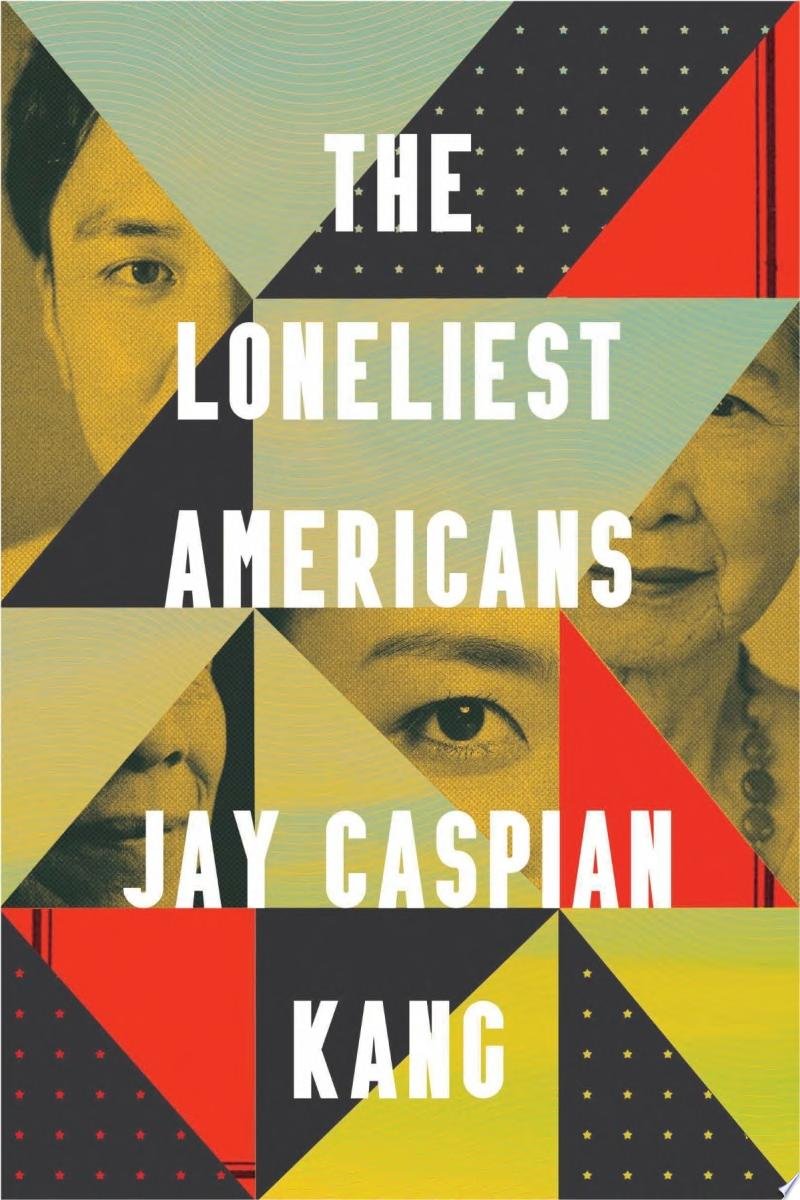
A writer-at-large for The New York Times Magazine explores what he identifies as an existential loneliness in himself and in other Asian Americans who try to locate themselves in the country's racial binary, drawing on his own family history as well as the stories of other Asians and Asian Americans.
What The Reviewers Say
Marella Gayla,
The New Yorker
The subject of The Loneliest Americans is the broad incoherence of Asian American identity, but what Kang writes about most lucidly is the way that upwardly mobile Asians like him—the ones who were raised and educated in the U.S., and are now queasily enjoying the lives that their parents always wanted for them—have made it so ...something of a circular project—a book by an Asian writer about how the Asians who write books should cede control of the story—and Kang is its reluctant protagonist.
Rhoda Feng,
The Brooklyn Rail
If the past 18 pandemic months have offered an intravenous drip of hate crimes against Asians, Kang’s book titrates those events into a potent mix of memoir, cultural criticism, and deep reporting. The ingredients are volatile, the book, hot to the touch.
Summer Kim Lee,
Los Angeles Review of Books
Although Kang does not deny his personal relationship to the stories he is telling, he does make clear, particularly in the book’s introduction where he talks about his family, that he is wary of how his biography might be weaponized to authenticate his point of view and elicit a reader’s sympathy. There is a reluctance to commit to memoir; he withholds an account of the self at the same time that he is compelled to tell it, since such an account is what brings him too close for comfort to his subject matter. This resistant push and pull within Kang’s autobiographical writing produces intriguing moments when discussions of the heterogeneity of Asian America comes up against the unsettling anxiety that there are perhaps only small differences (and some uneasy likenesses) between himself and those he writes about.
Leland Cheuk,
San Francisco Chronicle
The book calls out that there are huge swaths of Asian Americans who are not upwardly mobile, well-educated members of a 'multicultural elite,' but unfortunately, mostly tells the stories of the high achievers. Consequently, his broad proclamations about Asian Americans, like the following, feel vague.




 17
17