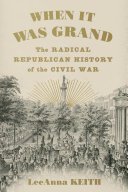
A high school history teacher looks back at a radical wing of the Republican party that agitated for the abolitionist cause before and after the U.S. Civil War.
What The Reviewers Say
David S. Reynolds,
The Wall Street Journal
Lincoln’s combination of cautiousness and radicalism is aptly described by LeeAnna Keith.
Randall M. Miller,
Library Journal
Keith writes at length and with eloquence about the role of black abolitionists in pressing for emancipation before and during the war; black military service during the war; and radicals’ efforts to use confiscation, loyalty oaths, and especially black enfranchisement to reconstruct the South during and after the war. Some scholars might be surprised by Keith’s assertion that radicals brought on secession and war by their uncompromising politics.
Alan Moores,
Booklist
Author Keith...casts light on the important role of so-called Radical Republicans in inculcating the idea of abolition into mainstream American thinking.
Publishers Weekly
Keith stretches the definition of radical Republicanism to the point of distortion, claiming that it was both a political faction and a 'religious and philosophical movement,' and grouping nearly every American who opposed slavery, assisted freed slaves, or supported the Union cause under the same banner. Ending her account before Reconstruction, however, she obscures the Radicals’ greatest legislative achievements. The result is a wide-ranging history that does little to illuminate its weighty subject..