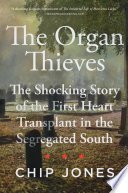
In 1968, Bruce Tucker, a black man, went into Virginia's top research hospital with a head injury, only to have his heart taken out of his body and put into the chest of a white businessman. Now journalist Chip Jones exposes the horrifying inequality surrounding Tucker's death and how he was used as a human guinea pig without his family's permission or knowledge.
What The Reviewers Say
Barbara Bamberger Scott,
Bookreporter
... wrenchingly bleak truth.
Rosamund Urwin,
The Times (UK)
At the end of The Organ Thieves, Bruce is still a mere sketch rather than a fully-fledged character, a skeleton rather than a fleshed-out man. Bruce’s son Abraham, who was 14 when his father died, declined to speak to Jones when he came calling. Jones rightly feels it was shocking that parts of Bruce’s body were taken without family consent; should he not have ensured he had their blessing before borrowing his story? And without that human element, the book also lacks a heart.
Harriet A. Washington,
The New York Times Book Review
In the hands of some writers, this would have become a powerful narrative, weaving one family’s tragedy into a nuanced panorama of race, medical innovation and ethics, scientific ambition and the law. But Chip Jones’s The Organ Thieves, which tells the story of what happened to Bruce Tucker, disappoints, with its pedestrian language, telling omissions and hagiographic portrayals of medical actors.
Nicholas Graham,
Library Journal
With elements of legal and social history, this work is recommended for readers interested in the history of race and racism, and how it relates to medical practice in the United States..